Saturday, April 23, 2011

Esteban's Espaghetti

Hola. Yeah, not much is sacred in the AlphaChef's world of food. A few years back, I made a twisted version of Mexican Chorizo Noodles and now its one of UB's favorite comfort foods.  I love it because its even easier to cook than getting a Republican to explode "That's not American!". Of course its American. We live in a melting pot of cultures and cuisine. I bang a Mexican dish against Italian, add a 'titch' of Thai and we get American Food. So there. If you don't like it go back to your walled compound.

Doing my patriotic duty, I first take one can of diced tomatoes and plop it, without draining, into a blender. I also add 1/2 chopped white onion, 2 chopped cloves of garlic, black pepper to taste, 1 tsp of fish sauce, 1/2 tsp of roasted ground coriander seed, 1/4 tsp of roasted ground anise and 1/4 tsp of roasted ground cumin.  Sometimes I also add handful of fresh parsley. Sometimes I add 2 chipotle peppers and other times I add couple of Thai chiles. I blend the cultural mish-mash into a puree. We'll deal with the stuff later.

For the next step, I use a large skillet that I can put a top on. Its about 14 inches across and 4-5 inches deep. I take 1/2 pound of fresh ground chorizo and massage it into a 1/2 pound of fresh ground hot Italian sausage. In the fifties, this would have gotten you lynched in NYC. We have come a long way baby.  And no, I have never been a member of the Communist party unless they cooked really great food.  Heat a skillet on medium to medium high, add enough oil to coat and then cook the mixed-background sausage through. Make sure it doesn't burn and chop it up so it stays in little pieces of loose meat. After it's thoroughly cooked, remove the meat and try to keep all that good, flavorful oil in the pan. Now, brown 1/2 pound of dry fettuccine or linguine pasta in the oil. I usually need to break the pasta in half to get it to fit into the pan. I typically do this in two batches. Once complete, remove the pasta.

Pour the pureed tomatoes and goodness into the pan. Keep stirring for the next couple of minutes until you think its cooked through. When you hit that point, and if you don't have a good vent, you've had a good cry from the onions and chiles, pour in about 16oz of chicken stock and about 8 oz of cheap Italian, French, Australian, Californian, or Chilean white wine. It can be a blend for all it matters. But no. I repeat, but no. Never sweet white wine. Yuck. Bring it to a boil. Once its boiling, add the pasta. Make sure you have enough liquid to easily cover all the pasta. Cover it for about 5 minutes and turn the flame down just enough so it doesn't boil over. Don't ask me how low. I don't know your stove. Just enough to keep boiling without boiling over. If you can't figure that out, run for Congress and call yourself Michele Bachmann. Maybe I shouldn't make that joke. I am losing my appetite.

After the 5 minutes have passed, take the lid off and add the meat and perhaps 1/2 of a finely sliced red bell pepper if its laying around and about to go bad. Mix it all in. Turn the heat down a bit more.  You want the liquid to boil off without causing everything to stick to the bottom of the dish.  If I didn't do it already, I sometimes add a 1/2 cup of chopped cilantro or parsley too. You want to cook this until it's almost dry. This means for the last few minutes you gotta keep moving it around. Also known as stirring or playing with your food.

Once cooked to the point its almost dry, plate it up.  I typically garnish with a bit of chopped cilantro or parsley, crumbled queso fresco, feta or chevre, sliced avocado and a squeeze of lime.

Eat. Feel good about yourself. And don't elect selfish, xenophobic idiots into office.

Saturday, April 9, 2011

I'll take your cod and raise you a salmon

It can be really enjoyable and sometimes really challenging to eat out.  Going out for a dish or style of cooking that I can't or don't want to cook at home is an easy decision.  Too lazy to cook tonight, done. Want to hang out with good friends at a nice restaurant? That's a pickle.

A few weeks ago, The UB and I went out to have dinner on Saint Patties day with some good foodie buddies. And no I didn't misspell the name of the holiday. Its not about a saint anymore. Its about drinking and eating. Patties not Patty's. Our friends suggested a restaurant we had never been to before called The Inn in downtown Minneapolis. It has gotten good reviews for both their drinks and food. A good combo platter for Saint Patties. The reviews weren't lying about the drinks. Which is the most important part of eating and drinking when its Patties day. I ordered a Captain Wentworth. I can understand why Annie Elliot fell in love but there was nothing poor about the Captain Wentworth. And if you are feeling poor, after drinking this bad boy down you'll greatly improve your situation. Now away from the literary allegory and back to alcohol. The drink is made with bourbon (maybe he wasn't really a British navel officer?), Fernet Branca, Berenjager Honey liqueur, and Black Walnut bitters.

The trouble began with the food. No. Don't get me wrong. The food is fine. The trouble was I had read gushing reviews of the cod, and white beans with herbs and garlic. I ate the dish and it was good. But those damn reviewers threw down the gauntlet.  You want fish? I'll give you fish. You want beans? I'll give you beans. Even if the fish and beans aren't of the same species or genus as yours. I don't got no cod but I got a salmon with fins. I'll take your challenge you hacks with taste buds. Actually, I generally like professional food critics but it was too good a line to edit out.

First the fish.

I decided that the cod, albeit nicely but plainly rendered, needed something more. No cod in the fridge and the salmon was on sale at Byerly's. First decision made. The rest of my ingredients were already in the bag. I mean my larder. Alright, I'll be honest, the ingredients were in the fridge as leftovers that needed to be used up.

I removed the salmon skin using a technique I already explained in a previous blog. if you don't remember it, go read the other salmon post. Or maybe just reread everything again. You got the time. Go do it. Cut the fish into two servings. If you haven't noticed almost all the measurements in this blog are for two servings and for my recipes all the measurements are approximate.  I don't measure anything. That's why I don't bake. I coated the salmon with Indian style black sesame seeds. I seared the salmon on both sides for about 30 seconds -1 min in a pan that was on medium high heat. I dropped the flame to medium and poured in enough cheap dry vermouth to roughly come up to about 1/2 of the salmon's side. We're sorta poaching now. Cover the pan for about 3 minutes. Remove the lid and poach it until it cooks to a nice medium well. If you have salt water based salmon you can cook it to just medium rare. Remove the fish and place it on a lascivious slaw who's recipe lays below in the gutter. Or next, if you will.  Salt to taste. I then lightly drizzled some blood orange olive on the
fish. Finally, I seeded a half of lemon, diced up the flesh and then dropped a dollop on each portion of fish.

I decided to lay the fish down in a matrimonial bed of slaw. I finely sliced about 1 1/2 cups worth of fennel bulb. Finely sliced lengthwise 1 large shallot. Two red chilies finely sliced lengthwise. 1 oz or so of prosciutto sliced into 1/8 strips. For this dish use cheap prosciutto, like the puttanesca it is. Bring a frying pan up to medium high heat. Add peanut oil or any non-smoking oil. Throw all the finely sliced leftovers, I mean veggies, into the pan and fry until crisp. Salt and pepper to taste.

Beans.


I used a similar white bean as The Inn did. I didn't take the trouble to cook them from dry. And I doubt The Inn did either. Their beans didn't have any 'pop' to them. I added olive oil to coat into a pot heated to medium. Then I sauteed 1/4 -1/2 tsp of smoked Spanish paprika and one clove of garlic until fragrant. I added one 8 oz w/o salt chicken stock. I recommend Kitchen Basic's brand. 1/4-1/2 tsp of fresh ground black pepper and brought the stock up to a boil. I reduced the broth until it as just enough to coat the beans, about 1/4 cup or less of liquid. I reduced the pot to medium low and added a can of drained cannellini beans, 2 tsp of fish sauce, 1 tbsp of fresh minced rosemary and 1/4 cup of diced sun dried tomatoes. If it still needs salt, add it. But canned beans often are pretty salty.

A bit of garnish.

I quartered some artichoke hearts and then liberally sprinkled oregano onto one side, salted to taste and lightly drizzled lemon oil oil and white balsamic vinegar. Toss and serve.

Sunday, April 3, 2011

Leftovers have never looked this good

We're getting new counter tops, which has been a long time coming. Having owned our 1950's style rambler for over 10 years we've been strategic about the changes we've made, responsibly factoring our home value against improvements we'd like to make. There's the value of making our home the way we want it to be versus the realistic strategy of not wanting to put more money in than we'll recoup in any future sale. We've made a fair amount of changes in the time since we bought this place, including new windows (always a good investment) and a fabulously indulgent bathroom (more because we wanted it). As for the kitchen, we've always assumed we'd put on an addition, break down a wall or move our basement staircase to get the kitchen of our dreams. Because of this, the changes we've made have been fairly malleable. New appliances, a floating laminate floor, multiple color schemes, but nothing that can't be moved or changed (no ceramic tile). Finally, we were going to do it, take out a loan and get the kitchen we've always wanted. We had an architect friend over for dinner (as we do best) and started to dream. We got really excited, showing the plans to multiple friends and family, mulling over the options, and then we involved our contractor. After waiting a couple weeks his bid came in, and we could tell right away that he didn't think he'd ever do this job. It quickly and painfully became apparent that building our dream kitchen would not be prudent. You never want to have the nicest house in the neighborhood and the cost of this remodeling alone would price us out. We first went through denial ( He must have misunderstood, did he price out high-end materials?), then bargaining (another bid?) and then began the process of acceptance, otherwise known in my industry as radical acceptance, the time to stop fighting reality and to take stock of our options. Basically, in order to have the kitchen we really want, we'd have to move. We don't want to move.

We now realize we'll have to make do with what we have, make smaller, less expensive changes that will have impact so we will both enjoy our time here and potentially add value for potential future buyers. So tomorrow we are replacing our counter tops, currently a dark brown laminate mimicking butcher block, with a lighter colored corian. Along with the new counter will be a new sink, so we needed to be able to disconnect all the plumbing prior to installation. Enter the Chateaubriand (read about it a couple posts ago). If you cook something really good, they will come. In this case, a close friend of ours who has plumbing talents. Tempted by the smell of charred beef, he was here, ready to put in cut-off valves so we can disconnect the plumbing with ease. This post is the follow-up, the leftovers. Our plumber talented friend actually indulged in this as well, as he busted a valve the night before...

This time the leftovers were made into a fabulous...look at the picture and read...fabulous, sandwich. Alphachef stopped at our local Byerly's on the way home from work and bought some pretzel rolls, fresh tomatoes (unbelievably good when considering it's still winter) and horseradish. He cut the rolls and layered red lettuce, tomato, slices of the beef tenderloin aka Chateaubriand, the herbed butter from the night before, some red onions, leftover soft brie (see the Antipasto post), topped with a spicy horseradish. So it is just a sandwich, but the motive of this post is tempting you into revisiting the beef tenderloin you wanted to make after reading the post but haven't gotten around to just so you can make this sandwich. There. The sandwich was almost better than the original dish- how often does that happen? Still not planning on the tenderloin? Then let this post inspire you to rethink leftovers and how good they can be with a bit of creativity. How often do you simply throw the leftovers in the microwave to heat up, while contemplating just tossing them and ordering a pizza? Generally guilt kicks in and you eat the "good enough" food. So get out of that rut and start thinking about what else the dish could be. Have some chicken? Add pasta or make a soup (just add it to canned soup- now even you can do that). That burrito/enchilada dish thing? Add an egg for a breakfast dish. Salads are also a nice options, anything can be placed over lettuce as are sandwiches. To kick your day after sandwich up a notch, buy a nice roll and some new condiments. Rainbow and Cub sell "bolero" rolls for less than a dollar each, and make a sandwich feel like something you stopped for on the way home. The point is, it just takes a little imagination and re-thinking the dish to go from uggg, leftovers, to ohhh, an opportunity.

Saturday, April 2, 2011

There's no place like home, new family and Grand Forks?

Proscuitto Salad, Pasta Negra and Foie Gras Tortelini, photo by Vita.mn
This week was busy, frantic and amazing. On the home front, AlphaChef spent less time cooking at home, busy with work- which in his industry equates to schmoozing over fancy meals. This schmoozing led to an awesome opportunity which culminated in a celebration dinner at Bar la Grassa. The Pasta Negra made with sea urchin, mussels and tomatoes is our favorite. It's a fresh pasta dish with squid ink spaghetti, tossed in garlic and sea urchin with fresh grape tomatoes and diced, somewhat spicy, green chiles just cooked enough to maintain a fresh crunch. Both the tomatoes and chilies give the dish a fresh taste, the pasta, perfectly al dente while the sauce is decadent. Topped with mussels, it's perfection. We also tried their Foie Gras Tortellini, which was truly fabulous. The server brought this out as our last course, this was a very good call, as it was both rich and sweet and just the right amount to finish the experience. They offer half portions of all their pasta dishes, so we can sample multiple dishes. Check out their menu- it's impossible to pick just two dishes. 

On my work front, we have been preparing for an important utilization review for the past month, which took place on Wednesday. Immediately after being grilled for an hour and a half by reviewers about the quality of my programming, I got a call at 10:30 am from my lovely sister. Through deep breathing brought on by contractions, she told me "I'm having a baby today". Awesome timing, since I would be able to leave to see her after the review. Choking back tears of both relief that I made it through the worst part of the review, excitement and nervousness for my sister and anticipation of meeting my new nephew, I left my office to continue my industry's brand of schmoozing, leading reviewers on a tour of our facility. We passed with flying colors- huge relief- and then I heard my nephew was born without a hitch. After more scrambling to cover Thursday work obligations, my brother and I took off the next day for Grand Forks at 5:30 am.

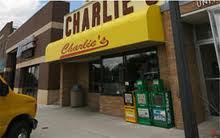
We stopped in Freeport, MN, which is just outside of Alexandria- the half way point- at Charlie's Cafe for breakfast. It is a fairly typical greasy spoon, until you look up and see their extraordinary good-looking lemon meringue pies. I have never seen such high, perfectly golden peaks of meringue. It was breakfast, so we made a promise to return for the pie on the way home and bought an apple turnover for the road. The turnover was a light, flaky pastry filled with apples and topped with a lovely cream cheese frosting. A bit rich after already eating breakfast, but what is a road trip without indulging in random foodie goodness along the way? 

At this point you may be wondering, why would a sister as lovely as mine be living in Grand Forks, North Dakota? If you're not wondering this, you've never been to Grand Forks. It's the military. My lovely sister's husband is in the Marines. Now, if you have been to Grand Forks, you may ask, what is a Marine family doing on an Air Force base? Good question- one they ask themselves on a daily basis. My brother-in-law, a gifted airplane mechanic also turns out to be a gifted, if not reluctant, recruiter for the Marines. Gifted enough to be granted the privilege of living in Grand Forks, where they needed a recruiter strong enough to lure those chair-force brats from North Dakota and Northern Minnesota into the elite Marine Corps. The upside is that they have been closer to us than they used to be (in North Carolina) so I have had the good fortune to bond with my nephew, and brave almost always treacherous roads to visit her. There is one good thing about Grand Forks, and it is most definitely not the weather. It is the Toasted Frog. By now you had to have known it was a restaurant. This little gem of a restaurant in located on 3rd Ave N in downtown Grand Forks. It's always packed. (Note to restaurant dreamers: Grand Forks NEEDS more good food options, it would be a goldmine). Their mostly Italian menu includes pasta, sandwiches and pizza. But the dish that makes the Toasted Frog a destination spot for me, that makes the five hour drive worth it, are the fried pickles. Erase any memory you have of fried pickles, I have never had them like this. They take whole pickle spears and wrap them in a wonton-like breading lined with havarti cheese. The pickles are fried and then cut on the bias and served with a sour cream, sriracha sauce. The result is a perfectly crisp, salty, chewy outside with a still cold, crisp dill pickle inside. This dish is so good, I'm debating whether I will have to go to Grand Forks every once in a while after my lovely sister moves back to her warm homeland. Okay, maybe not. But almost.  

The highlight of the visit was seeing my lovely sister, her precious new baby and ever growing family. Yes, I drove ten hours in one day to see them for five hours, but it was worth every minute. One of the most rewarding life experiences is forming relationships in which you will literally go through hell and high water to be with the object of your affection for even just a brief time. These are moments that we will always remember. I will be able to recount to both of my nephews the first moments of their lives, because I was there. I wouldn't give that up for anything.

So we trekked home, got caught in horizontally falling, blinding snow, faced bully semi-trucks going 90 miles per hour past us, almost ran out of gas just before getting to Alexandria (that would have been so stupid) and almost deliriously thinking I was in Elk River, when I was actually coming up to Maple Grove. I made it to good ol' Mpls, dropped off my equally deliriously tired brother and fell into bed. Just as I got home I realized we never made it back to Charlie's for the lemon meringue pie. Is it worth it to go back to try it? Maybe next time.

Sunday, March 27, 2011

Chateaubriand: Beef tenderloin to you and me

My apologies to my Hindu and Vegetarian friends, but sometimes beef is so damn good. This is coming from a bacon loving member of the tribe.

The difference between Chateaubriand and the tenderloin is slight. The tenderloin is the center foot and a half; you can have the butcher cut a smaller section.  The Chateaubriand is about six inches longer on either side. And when a chef, server or home cook says Chateaubriand with an overcooked faux French accent they deserve to be slapped. That and Chateaubriand is almost impossible to spell correctly on the first pass.

Beef tenderloin is a pricey hunk of flesh. Pork also has a tenderloin. Both can be cooked the same way. Except the pork should be cooked for about half the time and you'll spend about 75 percent less. So I cook pork tenderloin with greater frequency and usually only cook beef tenderloin on special occasions like when I bribe a good friend to help me fix the plumbing in the kitchen.

Beef tenderloin is expensive because on any given steer there isn't much of it, making it kinda rare. Which is also the only way to cook tenderloin. Let me explain.  Beef tenderloin is not a flavorful cut. If you want flavor save yourself a ton of dough and go buy a sirloin.  What it brings to the table is sweet talking, long walk on the beach, watching a beautiful summer sunrise with your new hon following the evening of your third date tenderness. If you get my drift. If you cook a tenderloin past medium rare what you get is flavorless, used to be tender, "why did I ever marry that jerk" tough. Since it doesn't have a lot of flavor, tenderloins just love to get all buttered up and saucy. And that is called foreshadowing.

Tenderloin is easy to cook if you follow the rules. Deviate from the path and your road is a tough road. What separates tenderloin from tenderloin is a crispy charred outside holding in beef that melts in your mouth. So start with the crisp and worry about actually cooking it later. Yeah, you heard me, crisp first, cook later.  I like to show a tenderloin whose boss by tying it up with a bit of string. This step is not necessary. This is more important with pork.  Every 2-3 inches put a loop of string around the tenderloin to make it round. Now the important part starts.  Salt the tenderloin on all sides and tightly wrap in plastic wrap. Leave it out on the counter for about an hour to come closer to room temperature.  No, you won't die from eating flesh that is growing nasty bacteria on the outside. Any evil bacterium will meet its maker soon.

After the hour is over, unwrap the beef. Preheat the oven to 300 degrees, with the rack in the center. At the same time, heat up a big metal skillet on medium high to high.  Put in enough peanut or other non-smoking oil to easily coat the pan. What we are going to do is put the char on.  First, place one end of the tenderloin into the searing hot pan. Hold the beef with your hands or tongs if you are too freaking scared of the occasional oil splatter. You'll know when its ready, when the beef fairly easily releases from the pan. You might need to use a spatula to help it let go. It takes about 30-60 seconds. Do not force it. If you are leaving good chunks of beef stuck to the pan, it is not ready yet. The char is supposed to stay on the beef and not on the pan. Repeat the process with the other end and then on all four sides of the tenderloin. This whole process should take no more than 8 minutes. What you should have is a beautifully charred, essentially uncooked, hunk of meat.

There is an alternate technique. Use a blowtorch. Its brute force will do the job. And you can use it to sweat the pipes in your kitchen because you had to put in cut off valves so you can replace your counter tops but that is another story. Use the blowtorch to char the hell out it and any evil bacterium.

Place the charred tenderloin on a cooking sheet with a wire cooling rack. Coat the tenderloin with unsalted butter and spice if you wish. Place the tenderloin in the oven on the middle rack and let let it cook for 40-50 minutes, until an instant read thermometer reads 125 degrees. Cook beyond 135 degrees and you'll get shoe leather. Remove it from the oven and resist any temptation to cut into it for 10-15 minutes. It is still cooking and the juices are moving back deep inside the meat from the walls.  While the beef is resting, generously coat it with herbed or spiced butter.  After the tenderloin has rested, slice it into 1/2" thick medallions of goodness and serve.  I like to serve the tenderloin with extra herbed or spiced butter on top. I served this dish with veggies (red onion, bell pepper, apple and dried cherries) I cooked in the same pan that I seared the meat to add a beefiness to it. I drizzled the veggies with a basil and blood orange sauce. I placed the tenderloin medallions on cinnamon clove spiced quinoa- leave a comment if you want those recipes.

Herbed or spiced butter. Can be almost anything your imagination can serve up. Here's the basics. Use about 4-6 tablespoons of unsalted butter.  Bring to room temperature. Mash in whatever you are using to flavor it. Keep about 2-3 tablespoons to rub the tenderloin after its removed from the oven. The other 2-3 tablespoons can be shaped into discs, squares, swans, automobiles, bunny wraps....and then placed into the refrigerator to cool and harden. Use these miniature flavored butter sculptures as garnish.

Possible combinations for flavoring the butter: Use salt if you want.  Clove or two of garlic minced, 1 shallot, and 2 tablespoons minced fresh parsley. Or, 1 clove minced garlic, 1 tablespoon minced fresh ginger, 1 tablespoon minced lemongrass, 1 minced shallot and 1 tsp of cayenne pepper or 2 -3 minced fresh Thai chiles.  Or 1 tablespoon of adobo sauce, 2 chipotle peppers, juice from 1/2 half lime, and 1 clove of minced garlic, 2 tablespoons fresh cilantro and 1/8 onion minced. Or make up something yourself. Enough.

Saturday, March 26, 2011

Beta Baguette French Toast

I love the idea of making french toast from left over baguette, but I've never liked the execution. The very thing that makes a baguette so satisfying, the chewy, crunchy crust, just gets too hard, making it too difficult to cut with a fork and too difficult to chew.

But I still like the idea. We really don't buy much bread, just baguette when we eat antipasto and the occasional roll for a sandwich.

After a night of antipasto we always have some leftover and a couple days later it's hard as a rock. The next day though, it's just stale enough to make the perfect french toast. I figured out how to make it work.

It's all in how you cut the bread- very thin. Keep in mind, I took the pictures very close-up, so the bread looks much thicker than it actually is. I'd say it's cut in about 1/2 inch thick pieces, if not thinner. I only used one medium banana, which was enough for two, so it is sliced paper thin. Use it for scale when viewing the pictures.

This recipe may be the simplest of all my breakfast specialties, in fact, I don't even measure. I made it up off the top of my head and I'm not the AlphaChef. Believe me, after reading this once you won't even have to refer back to the posting.

I made enough for two people, about eight small slices each, which ends up using a little more than a third of the baguette. Mix four eggs with some vanilla- about a teaspoon and a half, 1 tsp cinnamon and about a half cup of milk, but I didn't measure, just add enough milk to dilute the eggs into enough liquid to soak the bread. I heated, on medium-high, two skillets so I could make them in about two batches. I hate trying to keep them warm prior to serving. Put a pat of butter on each skillet when hot. Throw the bread into the egg mixture for about 30 seconds, just enough to coat and soak briefly. I then put the coated bread on the skillet and cook until each side is golden brown.

I piled the pieces on a plate, added bananas and strawberries because I had them around and thought it would look good and served with maple syrup. That's it. Takes about 15 minutes for the whole process. The result is a crisp, but just soft enough, sweet and savory, delicious version of french toast. You can cut it with your fork and chewing is not a problem. Dilemma solved- baguette will never again be wasted in our house.

Wednesday, March 23, 2011

Beef Stew: a perfect one pot meal

Our picnic table, photo taken by my neighbor Cathy
Just when I thought it was too late for winter comfort food, we get another 3 inches of snow, I am choosing to look at the bright side. Don't get me wrong, I am still holding on tight to the Spring fever that gripped me last week, I'll just have to wear my fabulous new wedge sandals in the house for a couple more weeks. Sitting at my kitchen table eating stew. That's called making the best of it, people.

My favorite thing about winter is comfort food. Big surprise, I know. There are a number of AlphaChef dishes we only eat when it's cold, and they happen to be some of his best. My favorites are a Mexican pasta dish we haven't named yet, but will post, Thai sweet green curry, chicken soup and beef stew. This stew takes a little planning and foresight, but is simple to execute, using the Minnesota favorite slow cooker aka Crock Pot. The best thing about AlphaChef's stews is he frequently uses fruits and vegetables most people wouldn't think about putting in. My favorites have apple, dried cherries, sweet potatoes and parsnips. Once you get the technique down you can use anything you want, the key is to think out of the box, meaning beyond carrots, red potatoes and celery. How boring. Ironically, this recipe follows the boring, standard fair, but is really delicious. You can add anything, as I named above, or you can stick to the tried and true. What is special about this dish is the broth. AlphaChef uses a technique used in Beef Bourguignon, a French dish which uses wine to marinate the meat and for half the broth. This allows for a layering of flavor that elevates it beyond the typical dish of stew. I'll forgive him for not using fancy ingredients...this time.

He does all the work the night before and the slow cooker does the work all day. Start with beef, we used a pound and a half of chuck, sliced into 2-3" pieces. The traditional way is to marinate the raw meat overnight and then braise it in the morning. AlphaChef is more efficient and wanted to be able to pour it all in the slow cooker in the morning, so he braised the beef first and then put in the dish to marinate with red wine overnight. It turned out amazing, so the shortcut worked. Don't worry about the quality of the wine, in fact if you use good quality red wine, you're wasting it. An inexpensive $5-$8 bottle is fine.

To braise the meat: heat a frying pan to medium high, add 2 tablespoons of oil, like peanut oil which won't smoke and not olive oil. Cut the meat into 2-3 inch sections and throw the meat into the pan. Brown each side of the meat using tongs to turn it. Repeat until the beef is browned on all sides and remove. In a dish with a cover or zip-lock bag , pour red wine over the beef until it's covered. Marinate the beef overnight.

AlphaChef puts all of the following ingredients into the slow cooker where is sits overnight in the refrigerator, next to the beef, marinating in red wine (got it?). For this stew he used some baby carrots, grape tomatoes, fingerling potatoes, 1 sweet potato cut into chunks, 3 cloves crushed garlic, 1-2 bay leaves, 4 cloves, 1 onion chopped into large pieces- sauteed in beef fat (from the braising) until clear. In the morning, put all the vegetables and the marinated, braised beef into the slow cooker. Cover the beef halfway with one part beef stock and one part red wine. Cover the slow cooker and cook on low for 10 hours (while you're at work, or whatever you do all day). About 30 minutes prior to serving, add salt and black pepper to taste, 1 1/2 cup chopped parsley, 1 tbsp dried oregano and mix.

I live in Minnesota, where the cold is very cold and stays around much longer than we like. There is nothing like the energy of Spring and Summer in the Twin Cities, which actually (sometimes just barely) makes the winter worth it. Warm fireplaces, dinner parties with friends, hiring someone to shovel the snow and, for me, rich, warm comfort food, are strategies for getting through. Right now my tulips are peaking out, (yes, they will survive the snow) which means Spring is coming and my fabulous new sandals will soon see the sun.